Showing posts with label SCIENCE. Show all posts

Wednesday, 5 June 2019

MATTER TEST

MATTER DEFINITION

Matter is everything around us: air, rocks, water, living things... Matter is anything that has volume and mass.

  • Mass: it is the quantity of matter that an object has. We measure it in kilograms (kg) and grams (g). Measurement instrument: Scales.
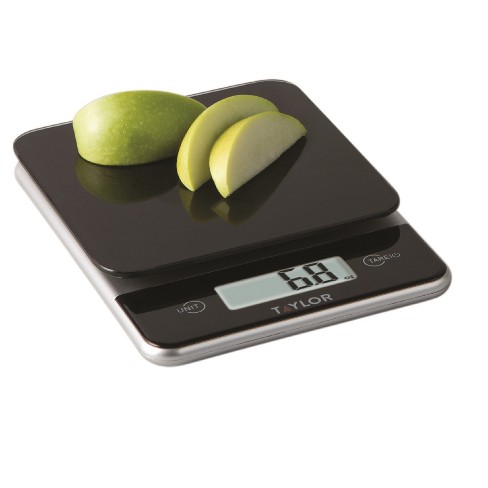
Resultado de imagen de scale
  • Volume: It is the amount of space an object takes up. We measure it in litres (l) and millilitres (ml). Measurement instrument: test tubes and measuring cups.

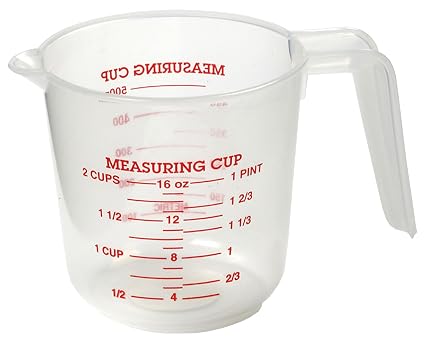
Resultado de imagen de test tubeResultado de imagen de measuring cup


PROPERTIES OF MATTER

  • Hardness: we say matter is hard when it is difficult to scratch. example: metal is harder than chalk.
Resultado de imagen de hardness scratch
  • Brittleness: matter is brittle when it breaks easily.  Example: glass is more brittle than wood.


  • Elasticity: Matter is elastic if it returns to its original shape after we remove the force we have applied to it. Example: rubberbands are more elastic than rocks.

  • Density: Relationship between mass and volume. A metal ball is denser than a paper ball.


MATTER CLASSIFICATION

STATES OF MATTER


CHANGES OF STATE


PURE SUBSTANCES AND MIXTURES

PURE SUBSTANCES: Made by one component

MIXTURES: made by two or more components. They can be:
  • HOMOGENEOUS MIXTURES: we CAN'T see the components (mayonnaise)
  • HETEROGENEOUS MIXTURES: we CAN see the components (salad)

SEPARATING MIXTURES

We can use different methods:
  • Evaporation: Used to separate homogeneous mixtures composed by a liquid and a solid.
Resultado de imagen de evaporation mixtures
  • Filtration: Used to separate heterogeneous mixtures composed by a liquid an a solid.
Resultado de imagen de colar zumo
  •  Decantation: used to separate heterogeneous mixtures made of two liquids of different densities
Resultado de imagen de decantation
  • Distillation:used to separate homogeneous mixtures of two liquids with different boiling points

Resultado de imagen de distillation for kids


MATTER CHANGES

CHANGES IN MATTER

Physical change: The shape or form changes, but mass and volume stay the same.

Chemical change: Matter is transformed into a new substance: Chemical reactions in nature:
  • Oxidation
Resultado de imagen de oxido
  • Combustion
Resultado de imagen de combustion
  • Fermentation
Resultado de imagen de fermentation bread

Friday, 12 April 2019

PLANTS TEST

CHARACTERISTICS OF PLANTS

A plant is a living thing with limited movility. They are living things that make their own food.

PARTS OF A PLANT

Plants need four substances to make their own food: water, minerals, sunlight and carbon dioxide. they get it through their main organs: roots, stem and leaves:


  • LEAVES: They capture sunlight and carbon dioxide from the air. they use the sunlight, carbon dioxide, water and minerals to make nutrients.

  • STEM: It supports the plant and carries water, minerals and nutrients through the vessels.

  • ROOTS: They take in water and minerals from the soil.

CLASSIFICATION OF PLANTS


  • FLOWERING PLANTS: they have organs like flowers, fruits and seeds

    • ANGIOSPERMS: they grow fruits with seeds inside the fruit. (apple trees)

    • GYMNOSPERMS: they have seeds but not fruits (pine trees)

  • NON-FLOWERING PLANTS: they don´t have seeds. They reproduce through spores

    • FERNS: they have roots, leaves and stem. Spores are under the leaves
Imagen relacionada Resultado de imagen de ferns
    • MOSSES: they don´t have roots, leaves or stem. Spores are produced in capsules at the end of the filaments

Resultado de imagen de mosses sporesImagen relacionada


PLANTS NUTRITION

Resultado de imagen de PLANTS RESPIRATION
  • PHOTOSYNTHESIS
Plants make their own nutrients through photosynthesis. Plants absorb carbon dioxide and water with minerals and release oxygen. It takes place in green leaves during the DAY. They absorb energy from sunlight through the chlorophyll:


WATER + CARBON DIOXIDE + SUNLIGHT = GLUCOSE + OXYGEN

Imagen relacionada

  • RESPIRATION
It is related to how plants get energy. Plants absorb oxygen fron the air and release carbon dioxide and water vapour. This process takes place during DAY and NIGHT

Resultado de imagen de plant respiration


HOW DO PLANTS MAKE NUTRIENTS?

  1. Plants absorb water and minerals through their roots. This mixure is raw sap.
  2. Xylem vessels are tubes that carry the raw sap from the roots to the leaves.
  3. Leaves absorb carbon dioxide through pores called stomas.
  4. Photosynthesis takes place inside the leaves. Sunlight transforms raw sap and carbon dioxide into nutrients inside the leaves.
  5. The nutrients formed inside the leaves are called elaborated sap.
  6. Phloem vessels transport elaborated sap all over the plant. 


Thursday, 28 March 2019

PLANTS VIDEOS

Here you have the videos we have seen in class about plants:


Thursday, 14 March 2019

SCIENCE TEST CELLS

Hello everybody!
Here you have all the contents you need to rock the cells test!

Good luck to everybody!


CELL DEFINITION

The cell is the basic building block of all living things.


TYPES OF CELLS

There are two differnt types of cells: Animal cells and plant cells.


CELL PARTS AND ORGANELLES
  • Common to animal and plant cells:


  • Animal cells organelles:
  • Plant cells organelles:


Monday, 18 February 2019

SCIENCE: CELLS RAP AND SONG

Hello everybody!!!

Here you have the Cells Rap for you to review the parts of animal and plant cells!!!
Remeber:

Cells, cells, they're made of organells ♫♫


Wednesday, 28 November 2018

WEATHER AND CLIMATE TEST

Here you have the contents you need to know for our test:

WHAT IS WEATHER?

Weather is what the atmosphere is like in a place at a particular time. Weather can change from day to day or at diferent times in the same day.
Weather can be rainy, snowy, cloudy, foggy, sunny or stormy.


WEATHER ELEMENTS AND INSTRUMENTS

  • The wind: moving air makes wind.
  • Atmospheric pressure: this is how much of the air`s weight pushes on Earth. There are usually clouds and rain when the atmospheric pressure is low.
  • Temperature: Temperatures are high when it is hot and low when it is cold.
  • Precipitation: It is the water that falls to Earth.

WEATHER INSTRUMENTS


  • Rain gauge: it is the instrument that measures rainfall in mililitres
Resultado de imagen de rain gauge
  • Barometer: It is the instrument that measure the atmospheric pressure in millibars. the atmospheric pressure is the air's weight.
Resultado de imagen de barometer
  • Anemometer: It is an instrument that measures the wind's speed in km/h (kilometers per hour).
Imagen relacionada
  • Thermometer: It is the instrument that measures temperature in degrees (ºC)
Resultado de imagen de thermometer
  • Wind vane: A wind vane or weather vane is an instrument that measures the wind`s direction (North, South, East, West)
Resultado de imagen de wind vane


WHAT IS CLIMATE?

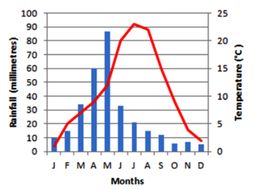
Climate is the typical weather of a region for a long period of time. To study climate, scientists study weather for at least thirty years. They record them on a climate graph. Climate graphs represent the temperature4s and precipitation of an area during an entire year:

Imagen relacionada

CLIMATIC FACTORS

  • Latitude: The Sun's rays are stronger the closer they are to the Equator. The Poles are the coldest places on Earth.
  • Altitude: The higher a place is above the sea level, the colder it is.
  • Distance from the sea: The sea absorbs the Sun's heat and then loses it slowly.


Wednesday, 24 October 2018

SCIENCE TEST

Hello everybody!

As you know, next Monday we will do the Unit 1 Science test. On Thursday we are going to review all you need to know.

Here you have all the contents you need to study:


ORDER OF THE PLANETS:

Resultado de imagen de ORDER OF THE PLANETS

MAIN CHARACTERISTICS OF THE PLANETS

  • Mercury: It is the closest planet to the Sun. It is the smallest planet in the Solar System.
  • Venus: Its surface is covered by clouds.
  • Earth: Most of its surface is covered by water. It is surrounded by an atmosphere.
  • Mars: The iron in its surface makes it colour red.
  • Jupiter: It is the largest planet. 
  • Saturn: It has rings around it made of ice and dust.
  • Uranus: its axis is very tilted.
  • Neptune: It has no water despite its blue colour.
VIDEO


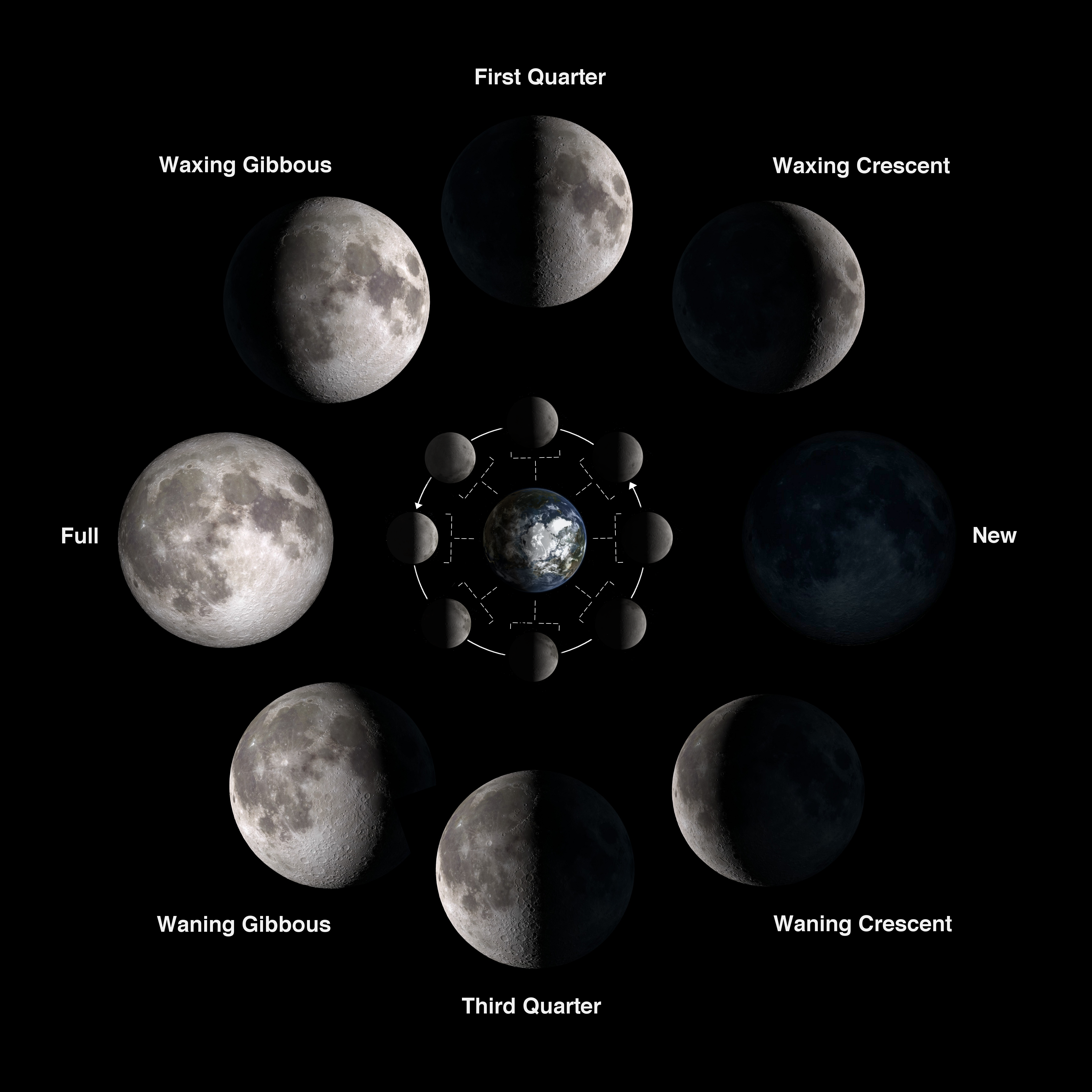
PHASES OF THE MOON
Resultado de imagen de phases of the moon
MERIDIAN, PARALLELS AND COORDENATES

Resultado de imagen de meridians and parallels

Resultado de imagen de meridians and parallels


COMPASS: It is an instrument that helps us with orientation. It shows the cardinal points.

MAP KEY: It explains the symbols from the map.


LONGITUDE: It is represented by MERIDIANS. They measure a point on a map that is to the West or to the East of the Prime Meridian.

LATITUDE: It is represented by PARALLELS. They measure a point on a map that is to the North or South of the Equator.


EQUATOR: It is the imaginary line that divides the Earth in two hemispheres: North and South.


PRIME MERIDIAN: The Greenwich Meridian. It is the imaginary line that connect the poles. It is the starting point for time zones.


EARTH HEMISPHERES: The Prime Meridian divide the Earth into the Western Hemisphere and the Eastern Hemisphere. The Equator divide the Earth into the Northern Hemisphere and Southern Hemisphere.

VIDEOS:

MERIDIANS AND PARALLELS

MERIDIANS AND PARALLELS 2

TIME ZONES

TIME ZONES 2

GAMES

GAME 1

GAME 2


GOOD LUCK!!!!