Wednesday, 5 June 2019

MATTER TEST

MATTER DEFINITION

Matter is everything around us: air, rocks, water, living things... Matter is anything that has volume and mass.

  • Mass: it is the quantity of matter that an object has. We measure it in kilograms (kg) and grams (g). Measurement instrument: Scales.
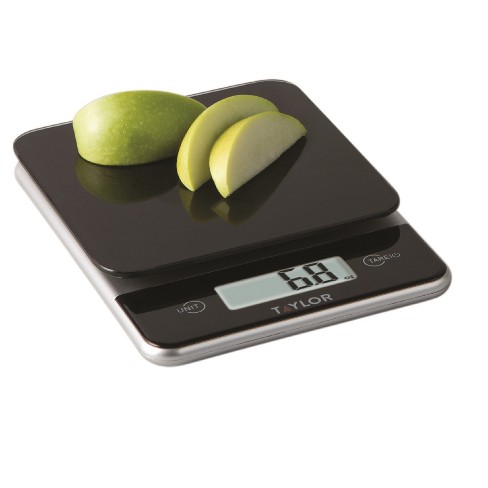
Resultado de imagen de scale
  • Volume: It is the amount of space an object takes up. We measure it in litres (l) and millilitres (ml). Measurement instrument: test tubes and measuring cups.

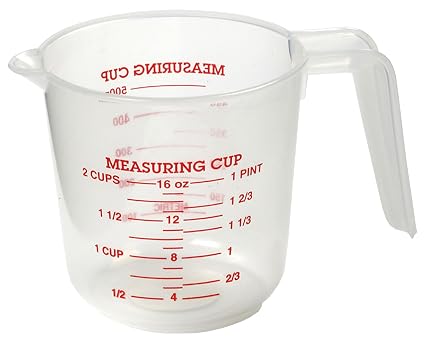
Resultado de imagen de test tubeResultado de imagen de measuring cup


PROPERTIES OF MATTER

  • Hardness: we say matter is hard when it is difficult to scratch. example: metal is harder than chalk.
Resultado de imagen de hardness scratch
  • Brittleness: matter is brittle when it breaks easily.  Example: glass is more brittle than wood.


  • Elasticity: Matter is elastic if it returns to its original shape after we remove the force we have applied to it. Example: rubberbands are more elastic than rocks.

  • Density: Relationship between mass and volume. A metal ball is denser than a paper ball.


MATTER CLASSIFICATION

STATES OF MATTER


CHANGES OF STATE


PURE SUBSTANCES AND MIXTURES

PURE SUBSTANCES: Made by one component

MIXTURES: made by two or more components. They can be:
  • HOMOGENEOUS MIXTURES: we CAN'T see the components (mayonnaise)
  • HETEROGENEOUS MIXTURES: we CAN see the components (salad)

SEPARATING MIXTURES

We can use different methods:
  • Evaporation: Used to separate homogeneous mixtures composed by a liquid and a solid.
Resultado de imagen de evaporation mixtures
  • Filtration: Used to separate heterogeneous mixtures composed by a liquid an a solid.
Resultado de imagen de colar zumo
  •  Decantation: used to separate heterogeneous mixtures made of two liquids of different densities
Resultado de imagen de decantation
  • Distillation:used to separate homogeneous mixtures of two liquids with different boiling points

Resultado de imagen de distillation for kids


MATTER CHANGES

CHANGES IN MATTER

Physical change: The shape or form changes, but mass and volume stay the same.

Chemical change: Matter is transformed into a new substance: Chemical reactions in nature:
  • Oxidation
Resultado de imagen de oxido
  • Combustion
Resultado de imagen de combustion
  • Fermentation

Resultado de imagen de fermentation bread


Friday, 12 April 2019

PLANTS TEST

CHARACTERISTICS OF PLANTS

A plant is a living thing with limited movility. They are living things that make their own food.

PARTS OF A PLANT

Plants need four substances to make their own food: water, minerals, sunlight and carbon dioxide. they get it through their main organs: roots, stem and leaves:


  • LEAVES: They capture sunlight and carbon dioxide from the air. they use the sunlight, carbon dioxide, water and minerals to make nutrients.

  • STEM: It supports the plant and carries water, minerals and nutrients through the vessels.

  • ROOTS: They take in water and minerals from the soil.

CLASSIFICATION OF PLANTS


  • FLOWERING PLANTS: they have organs like flowers, fruits and seeds

    • ANGIOSPERMS: they grow fruits with seeds inside the fruit. (apple trees)

    • GYMNOSPERMS: they have seeds but not fruits (pine trees)

  • NON-FLOWERING PLANTS: they don´t have seeds. They reproduce through spores

    • FERNS: they have roots, leaves and stem. Spores are under the leaves
Imagen relacionada Resultado de imagen de ferns
    • MOSSES: they don´t have roots, leaves or stem. Spores are produced in capsules at the end of the filaments

Resultado de imagen de mosses sporesImagen relacionada


PLANTS NUTRITION

Resultado de imagen de PLANTS RESPIRATION
  • PHOTOSYNTHESIS
Plants make their own nutrients through photosynthesis. Plants absorb carbon dioxide and water with minerals and release oxygen. It takes place in green leaves during the DAY. They absorb energy from sunlight through the chlorophyll:


WATER + CARBON DIOXIDE + SUNLIGHT = GLUCOSE + OXYGEN

Imagen relacionada

  • RESPIRATION
It is related to how plants get energy. Plants absorb oxygen fron the air and release carbon dioxide and water vapour. This process takes place during DAY and NIGHT

Resultado de imagen de plant respiration


HOW DO PLANTS MAKE NUTRIENTS?

  1. Plants absorb water and minerals through their roots. This mixure is raw sap.
  2. Xylem vessels are tubes that carry the raw sap from the roots to the leaves.
  3. Leaves absorb carbon dioxide through pores called stomas.
  4. Photosynthesis takes place inside the leaves. Sunlight transforms raw sap and carbon dioxide into nutrients inside the leaves.
  5. The nutrients formed inside the leaves are called elaborated sap.
  6. Phloem vessels transport elaborated sap all over the plant. 


Thursday, 28 March 2019

PLANTS VIDEOS

Here you have the videos we have seen in class about plants:


Monday, 25 March 2019

WRITING A STORY

WRITING A STORY
  • WHEN?: last saturday, once upon a time, two weeks ago...
  • WHO?: Katie and Sam, me and my cousin, the dog and the cat, my pet...
  • WHERE?: The café, in the cinema, far far away, at school, in La Morea...
  • WHAT?: find something, something happened… A PROBLEM     + ADVENTURES
  • END: PROBLEM SOLVED


EXAMPLE 5ºA
Once upon a time, there were two boys and one dog that lived in Japan...


EXAMPLE 5ºB
Once upon a time, in La Morea, there was a girl called Anne. It was her birthday...

FINISHED EXAMPLE


Once upon a time, in La Morea, there was a girl called Anne. It was her birthday... She went to one shop to buy some clothes. She bought a jacket and a T-shirt in Gucci. In the shop she found a purse. Inside the purse there were an Iphone X and a wallet. Inside the wallet there was a lot of money, more than a million Euros!!!!
Suddenly she saw a woman very worried saying: where is my purse???. Anne gave her the purse. the woman said thank you and rewarded Anne with a trip to Paris!


Thursday, 14 March 2019

SCIENCE TEST CELLS

Hello everybody!
Here you have all the contents you need to rock the cells test!

Good luck to everybody!


CELL DEFINITION

The cell is the basic building block of all living things.


TYPES OF CELLS

There are two differnt types of cells: Animal cells and plant cells.


CELL PARTS AND ORGANELLES
  • Common to animal and plant cells:


  • Animal cells organelles:
  • Plant cells organelles:


Monday, 18 February 2019

SCIENCE: CELLS RAP AND SONG

Hello everybody!!!

Here you have the Cells Rap for you to review the parts of animal and plant cells!!!
Remeber:

Cells, cells, they're made of organells ♫♫


Friday, 8 February 2019

SCIENCE TEST FIVE KINGDOMS


HELLO EVERYBODY!!!

Here you have the main information for the Five Kingdoms Test for next Tuesday:

FIVE KINGDOMS


Resultado de imagen de FIVE KINGDOMS


BACTERIA

  • Unicellular
  • Simplest organism
  • Cells with NO defined nucleus
Resultado de imagen de BACTERIA


ALGAE AND PROTOCTISTA
  • ALGAE
    • Unicellular and multicellular
    • Make their own food
    • No organs
    • Cells with nucleus 
Resultado de imagen de ALGAE
  • PROTOCTISTA (protozoa)
    • Unicellular
    • Feed on other living things
    • cells with nucleus
Resultado de imagen de PROTOCTISTA

FUNGI
  • Multicellular (mushrooms)
  • Unicellular (yeasts)
  • Feed on the remains of other living things
  • Cells with nucleus
Resultado de imagen de FUNGI

ANIMALS
  • Multicellular
  • Feed on other living things
  • Cells with nucleus
Resultado de imagen de PLATYPUS

PLANTS
  • Multicellular
  • Make their own food
  • Cells with nucleus
Resultado de imagen de PLANTS

4 FEATURES OF LIVING THINGS

  1. They are born. They are alive.
  2. They grow and they eat.
  3. They reproduce
  4. They die.

GOOD LUCK!!

Friday, 14 December 2018

ENGLISH UNIT 2

VOCABULARY


GRAMMAR


Resultado de imagen de zero conditional

E-MAIL EXAMPLE

FROM: sruiz@mail.es
TO: student1@mail.es
SUBJECT: Christmas festival clothes
DATE: Friday, 14th December, 2018

Dear Sandra,

This December we have the Christmas festival. For our show we have to wear some special clothes: we need a pair of yellow boots, the socks must be with red, green and white stripes. You can wear leggins or trousers, they have to be with spots of the same colours as the socks stripes. If you wear a bright red T-shirt, you bring a green hat. If you wear a dark green jumper, you wear a dark pink hat. We need a golden handkerchief made of silk.

See you soon,

Ana